01
Project overview
The complete EMO City approach
Bringing human experience into the way we understand, design and improve urban spaces.
EMO City brings together human responses, environmental analysis and digital tools to understand how urban spaces are experienced. Our goal is to make that experience a practical part of planning and design, helping teams identify what matters and where change can make a difference.
The video could not be loaded. Please use the YouTube link above.
A closer look
Explore our approach and the two tools behind EMO City.
Slide to browse. Open a poster to zoom and pan.
The complete EMO City approach
From human response to insight
From environment to design evidence
Products
Understand the experience.
Explain the environment. Inform the next step.
A structured workspace for understanding how people respond to a place.
Bring physiology, eye tracking, questionnaires and interviews into one participant-centered workflow.
Align recordings and annotate interviews so responses can be understood alongside the experience.
Reconstruct comfort over time and export structured results for further analysis and comparison.
Core outputs Aligned data · Annotated responses · Comfort curves
An analysis framework connecting the character of a place with human experience.
Describe streets through their visual elements, spatial conditions and soundscape.
Examine how environmental features relate to people's responses and identify patterns that matter.
Identify low-comfort segments and translate findings into evidence cards and planning priorities.
Core outputs Environmental features · Experience relationships · Design evidence
Our principle
Making that experience visible, understandable and actionable.
Looking ahead
Our next steps connect deeper understanding with wider, practical use.
Extend the approach across urban settings and diverse communities, supporting more inclusive planning.
Develop easier reporting and interpretation tools, helping teams turn complex evidence into practical design priorities.
Build adaptable workflows and international partnerships to support shared learning across cities.
Our team
Connecting urban planning, psychology, geographic information and software development.


Psychology · Experimental design
Ludong University
Urban planning · Practice
Ludong University
Fieldwork · Data curation
Ludong University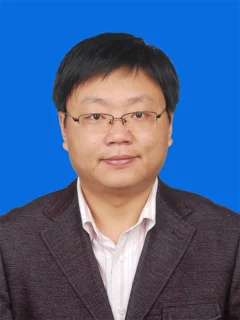
Technical operations · Spatial data
Ludong UniversityBased at the College of Resources and Environmental Engineering, Ludong University
Work with us
For researchers, planners, design teams and organizations putting people at the center of urban change.
From a focused technical question to a shared research agenda, we can help you connect methods, software and urban practice.
Study design, immersive experiment protocols and the integration of physiological signals, eye tracking, questionnaires and interviews into a coherent evaluation approach.
Discuss access to EMO Manager and EMO Scape, software demonstrations, setup guidance, data exchange and workflow adaptation to your research context.
Support for streetscape feature extraction, multimodal data alignment, quality checks and comfort analysis, with clear outputs that connect findings to design questions.
Identify experience priorities, investigate low-comfort environments and develop evidence-informed design directions and approaches to before-and-after evaluation.
Joint studies, cross-city comparisons, method validation, interdisciplinary publications and collaborative proposals, with scope and data arrangements agreed together.
Technical discussions, project demonstrations, workshops and knowledge exchange to help research and planning teams understand and apply the approach.
Start a conversation
Share your context, objectives and the support you have in mind.
We will explore a suitable way to work together.